
Glass Inspection
Typical challenges During Architectural Glass Processing

dimensional accuracy
Dimensional accuracy defines how closely each glass unit conforms to the approved drawings, specifications, and tolerance limits. In glass applications, even marginal deviations in length, width, thickness, squareness, or edge straightness can result in installation challenges, improper load transfer, seal failures, or incompatibility with framing systems.
Dimensional verification typically includes checks for:
- Overall length, width, and thickness
- Edge straightness and squareness
- Flatness and bow (particularly critical for large façade panels and IGUs)
- Profile accuracy for processed or shaped glass
Accurate dimensions are essential to ensure proper fit-up with frames, gaskets, fixings, and façade systems, especially in unitised curtain walls and high-performance glazing assemblies. Consistent dimensional compliance also helps minimise site rejections, rework, and installation delays.
TGC’s role focuses on independent verification of dimensional compliance against approved drawings, applicable standards, and project-specific tolerances. Inspections are carried out as part of defined quality control checkpoints, with documented reporting to provide assurance to clients, consultants, and contractors that supplied glass meets specified dimensional requirements.
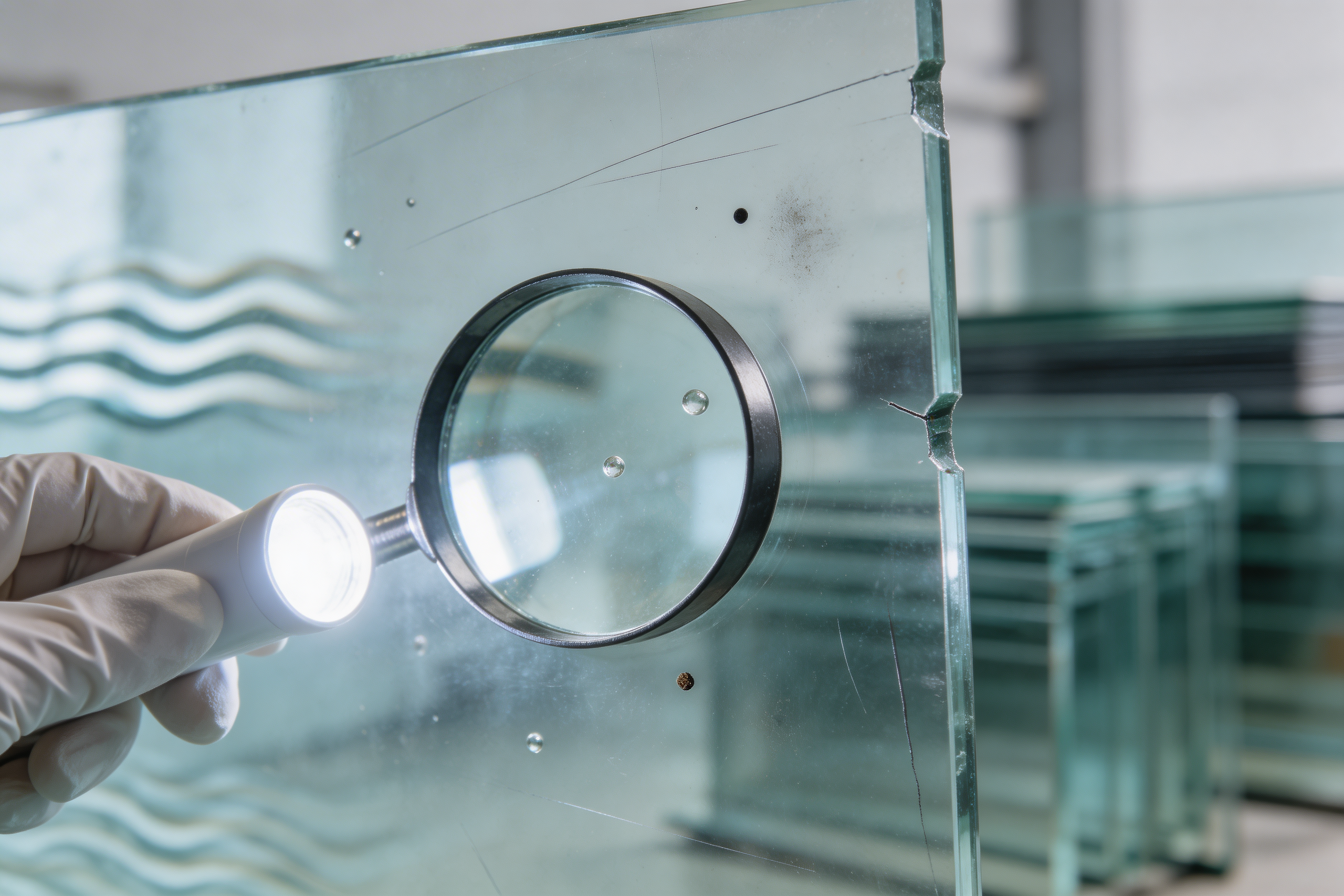
visual defects
Visual defects refer to surface and internal imperfections that affect the appearance, quality, and, in some cases, the performance of glass. While certain defects may appear cosmetic, others can indicate manufacturing, handling, or processing issues that may impact durability and service life.
Common visual defects include:
- Scratches, abrasions, and scuff marks
- Surface pits, stains, and roller marks
- Bubbles, seeds, and foreign inclusions within the glass
- Edge chips, cracks, and shelling
- Distortion, waviness, or uneven surface reflections
Visual inspection is conducted under controlled lighting and viewing conditions, using defined inspection distances and acceptance criteria. This ensures a consistent, objective assessment aligned with relevant standards and project specifications.
As an independent inspection body, TGC assesses visual quality in accordance with agreed criteria and documents observed non-conformities to support transparent acceptance decisions. This is particularly critical for architectural and façade glass, where visual defects may become more apparent after installation due to reflections, lighting conditions, and viewing angles.
STRENGTH & DURABILITY
(Including Nickel Sulfide Inclusions & Heat Soak Testing)
Strength and durability define a glass product’s ability to withstand mechanical loads, thermal stresses, and long-term service conditions without failure. These characteristics are especially critical in safety-critical and façade applications.
Heat-treated glass products, such as heat-strengthened and fully tempered glass, offer significantly higher strength than annealed glass due to induced surface compression during the heat treatment process. However, despite this enhanced strength, tempered glass carries a known inherent risk associated with Nickel Sulphide (NiS) inclusions.
Nickel Sulphide (NiS) Inclusions
Nickel Sulphide inclusions are microscopic impurities that can form during the glass melting process and are generally undetectable through standard visual inspection. Over time, phase transformation within the inclusion can lead to internal stress build-up, potentially causing spontaneous breakage of tempered glass without external impact.
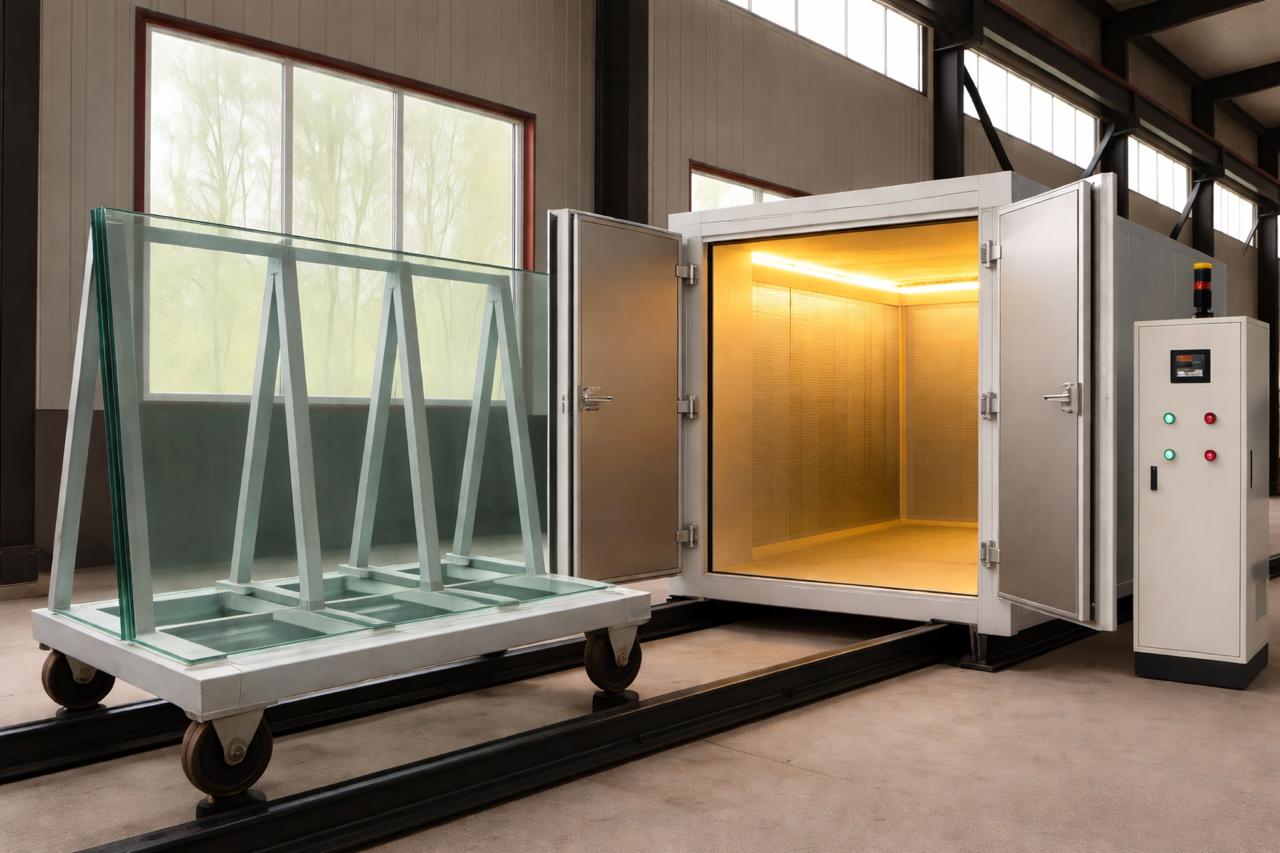
Heat Soak Testing (HST)
To significantly reduce the risk of spontaneous breakage associated with NiS inclusions, Heat Soak Testing is widely specified for critical glazing applications.
During heat soak testing:
- Tempered glass is exposed to elevated temperatures under controlled conditions
- Glass containing critical NiS inclusions is more likely to fail during the test
- Panels that pass the test have a substantially reduced risk of spontaneous failure in service
TGC’s involvement includes independent verification of heat soak testing compliance, review of testing procedures and records, and confirmation that project or specification requirements have been met. While heat soak testing does not completely eliminate NiS-related risk, it is an internationally recognised mitigation measure for high-risk applications such as façades, overhead glazing, and public spaces.

OPTICAL CLARITY
Optical clarity refers to the ability of glass to transmit light without unacceptable distortion, haze, colour variation, or visual interference. High optical quality is essential in architectural, façade, automotive, and specialty glazing applications, where visual performance is as critical as structural performance.
Key parameters influencing optical clarity include:
- Light transmission levels
- Surface flatness and uniformity
- Distortion and image deviation
- Haze and visual scatter
Optical distortions may arise from uneven thickness, improper heat treatment, residual stresses, surface irregularities, or processing effects. These issues can become particularly noticeable in large-format panels or under reflective façade conditions.
TGC conducts optical quality assessments as part of an independent inspection scope, verifying compliance with applicable standards and project-specific visual criteria. Findings are documented to support informed acceptance decisions and to help ensure that installed glass performs as intended, preserving transparency, visual comfort, and architectural intent.
Typical Challenges During Site Installation
HANDLING DAMAGE
Glass panels are vulnerable to damage during transportation and installation. Site inspection can help identify issues like cracks or chips that may have occurred during handling.
COMPATIBILITY
Ensuring that the glass panels fit precisely into their designated openings is crucial. Poor fit can compromise energy efficiency and security.
SAFETY CONCERNS
Incorrectly installed glass can pose safety risks. Inadequate quality control can lead to issues such as improper sealing or inadequate anchoring, compromising the building's integrity.
The Importance of Quality Control in the Factory
CLIENT SATISFACTION
Glass panels are vulnerable to damage during transportation and installation. Site inspection can help identify issues like cracks or chips that may have occurred during handling.
COST EFFICIENCY
Ensuring that the glass panels fit precisely into their designated openings is crucial. Poor fit can compromise energy efficiency and security.
SUSTAINABILITY
Detecting and addressing quality issues in the factory stage aligns with sustainability goals. It reduces the carbon footprint associated with rework, transportation, and waste disposal.
SAFETY ASSURANCE
Factory quality control ensures that glass panels meet safety standards, reducing the risk of accidents or structural failures at the site.
LONG-TERM PERFORMANCE
High-quality glass manufactured under strict quality control guidelines is more likely to perform well over the long term, contributing to the sustainability and durability of the building.
Visual inspection within factory for checking
inclusions within finished panel
Checking tempering quality of individual glass ply
12 meter panel glass skylight being inspected in natural daylight for visual quality after checking fabrication measurements and tolerances in factory.
Checking anisotropy of individual plies of tempered glass and high-performance coated glass
Checking Anisotropy of glass laminated tempered IGU glass panels with and without polarized filters for benchmarking before project production.
Chamfered glass edge check for alignment and accuracy
18 meter panels raw material arriving factory for Quality compliance and inspection before processing
Edge shift in panel to avoid glass breakage on site due to irregular transfer of self weight
5 x 12mm chemically tempered glass for marine glazing being transported after visual and fabrication checks in the factory.
Installed panel with Coating scratches, issue not covered by project specification
Installed glass with risk of breakage due to edge damage.
Glass surface damage, covered up with silicone by installer/contractor.
Distortion in tempered glass on site due to roller wave and edge dip
Checking consistency and alignment of spacer bar in IGU
Checking curving quality, working on optical distortions and curvature tolerances. Along with ensuring appropriate packaging for transport across continent.