
Bengaluru India
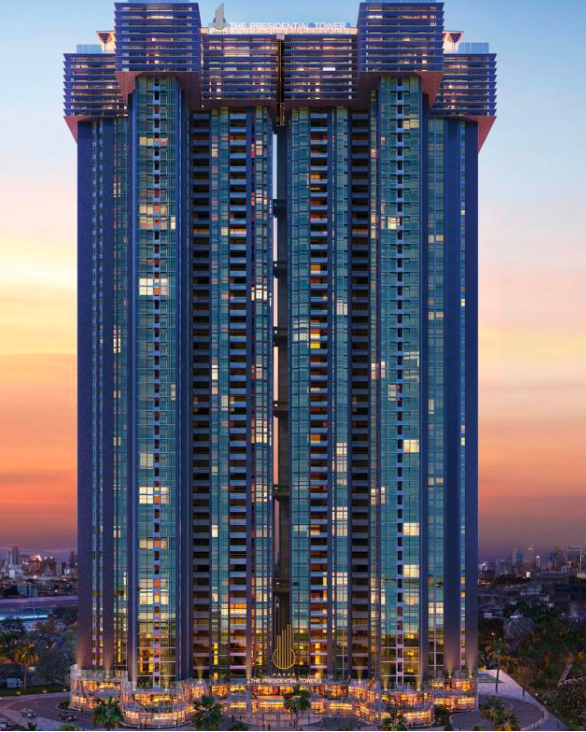
PRESIDENTIAL TOWER, BENGALURU –
MULTI-SITE INSTALLATION DEFECTS
Overview
Location: Bengaluru, India
Date of Inspection: 18 October 2025
Building: High-rise residential development
Scope: Structural glazing façade across multiple elevations
The façade system comprised heat-strengthened ET425 coated glass and toughened units in both laminated and double-glazed (DGU) configurations.
We were instructed to inspect six representative panels across two towers to assess reported defects and determine whether the issue was isolated or indicative of broader quality concerns.
The Challenge
During the construction phase, visible defects began appearing across sections of the installed façade.
The concerns were not limited to a single type of issue.
Several panels showed edge chipping and corner damage. In multiple locations, breakage had already occurred.
Other units displayed noticeable optical distortion that was clearly visible from over 50 metres away well within normal viewing distance for a residential tower of this scale.
In addition to glass-related concerns, installation quality issues were observed. These included:
- Missing or improperly seated gaskets
- Inconsistent trimming
- Alignment inconsistencies across elevations
At this stage of construction, the developer needed clear answers to two questions:
Were these defects originating from manufacturing, or were they caused during handling and installation?
And more importantly, how extensive was the problem?
A full replacement programme would significantly affect cost and schedule. However, leaving defective panels in place would impact both performance and visual quality in a premium residential development.
The project required an independent technical assessment before any corrective action was decided.
Initial Engagement
The Glass Company was appointed to conduct a structured on-site inspection and provide an unbiased evaluation of:
- Edge processing quality
- Coating uniformity and distortion levels
- Installation tolerances
- Gasket placement and interface detailing
- Breakage origin assessment
The objective was not simply to list defects, but to determine responsibility, quantify risk, and define the extent of necessary remediation.
OUR INVESTIGATION
PHASE 1
Defect Documentation and Location Mapping
We systematically inspected six panels at different locations and documented:
Tower A, Position 09-02 – Laminated Unit
- Defect: Severe edge chipping and corner breakage
- Cause: Mechanical impact during handling or installation
- Pattern: Fracture pattern consistent with high-stress, high-velocity impact on edge zone
- Observation: Since processed glass (heat-strengthened or toughened) concentrates compressive stress at the edges with tensile stress in the core, edge impacts result in complete failure
Tower A, Position 30-04 – DGU Unit
- Defect: Outer glass (ET425 coated) broken due to point impact; inner clear glass intact
- Secondary Issue: 2 mm bubble inclusion detected in inner glass, visible from 2 meters away
- Root Cause: External mechanical impact post-installation
- Quality Issue: Bubble inclusion suggests manufacturing defect in inner glass
Tower A, Position 10-04 – Laminated Unit
- Defect: Breakage at outer (ET425) surface due to concentrated point impact
- Pattern: Consistent with post-installation damage from external force
- Timeline: Damage occurred after installation during construction activities
Tower A, Position 09-02 – Lamination Unit (Secondary Defect)
- Defect: Point of impact at left corner, compounded by cement debris trapped between glass and wall
- Root Cause: Improper clearance between glass and frame combined with rigid debris entrapment
- Impact: Cement particles prevented proper load distribution, leading to edge stress concentration and corner chipout
Tower B, Position 02 – Lift Lobby, DGU Unit
- Defect: Edge corner breakage due to strong external impact
- Type: Fragmentation of ET425 outer ply consistent with mechanical impact
- Location: Lift lobby area indicates high-traffic zone with construction equipment exposure
Tower B, Position 21-04 – DGU Unit
- Defect: Top open edge breakage due to point of impact
- Pattern: Complete panel breakage from edge impact
- Cause: External mechanical damage, not thermal or manufacturing defect
PHASE 2
Installation Quality Defects
Beyond mechanical damage, we identified systematic installation issues:
Missing Gaskets
- Location: Tower A, 9th Floor
- Finding: Gaskets installed only on right edge; left edge completely missing gasket
- Impact: Glass movement within frame, increased edge stress, higher breakage risk
- Root Cause: Fabricator or installer incomplete workmanship
Improper SGP Interlayer Trimming
- Finding: SentryGlas Plus (SGP) interlayer trimming was not properly executed in some panels
- Impact: Uneven edges, potential gaps, compromised long-term durability and seal integrity
- Root Cause: Quality control failure during lamination process
Cement Debris Entrapment
- Finding: Small amounts of cement residue observed between glass and frame
- Impact: Creates rigid points of contact, prevents proper load distribution, increases edge stress
- Root Cause: Inadequate frame cleaning before glazing installation
PHASE 3
Optical Quality Assessment
During the inspection, we observed significant optical distortion on installed façade panels:
- Distance of Observation: Distortion was clearly visible from approximately 50 meters away
- Pattern: Wavy, non-uniform reflection of opposite building, indicating variations in surface flatness
- Severity: Classified as "moderate" distortion, noticeable but not disabling
Root Cause Analysis – Roller Wave Distortion:
The distortion likely resulted from:
- Reflective Coating Effects: The ET425 coating reflects significant heat. During tempering, the coated (reflective) side faces upward, while the uncoated side contacts furnace rollers. The coated side reflects heat, causing the uncoated side to heat faster, creating uneven temperature distribution.
- Furnace Temperature Unevenness: Hot spots or cold zones in the tempering furnace create differential heating rates.
- Roller Wear or Calibration: Furnace rollers that are worn or not properly aligned create subtle surface undulations during the glass passage.
- Quenching Pressure Imbalance: Uneven air pressure during rapid cooling can create surface irregularities.
PHASE 4
Quality Testing – Fragmentation Verification
We conducted on-site fragmentation tests:
- 6 mm Tempered Glass: 48 particles in 50×50 mm area – PASSED EN 12150 standard
- 6 mm Heat-Strengthened Glass: Multiple island fragments – PASSED standard requirements
- Conclusion: The glass itself meets fragmentation requirements; breakage pattern is appropriate for processing type
conclusions & recommendations for presidential tower
PANEL BREAKAGE
Primary Cause - External mechanical impact during construction
Secondary Factors - None identified (glass quality acceptable)
EDGE CHIPPING
Primary Cause - High-velocity impact on edge zone
Secondary Factors - Edge vulnerability inherent to tempered/heat-strengthened glass
INSTALLATION DEFECTS
Primary Cause -Incomplete gasket application, debris entrapment
Secondary Factors - Quality control failure during installation phase
OPTICAL DISTORTION
Primary Cause - Tempering furnace process parameters
Secondary Factors - Reflective coating thermal effects
BUBBLE INCLUSIONS
Primary Cause - Manufacturing defect in inner glass ply
Secondary Factors - Float glass production quality issue
RECOMMENDATIONS
IMMEDIATE ACTIONS
- Remove defective panels and inspect replacement units for quality before installation
- Replace all missing gaskets on similar elevations
- Clean frames thoroughly before re-glazing
- Conduct secondary quality inspection for other panels in similar configurations
QUALITY IMPROVEMENTS FOR FUTURE INSTALLATIONS
- Require the glass processor to optimize tempering furnace parameters:
- Uniform temperature distribution
- Balanced quenching air pressure
- Regular roller cleaning and calibration
- Specify flatness and distortion testing per ASTM C1048 / EN 12150 for high-reflective coatings
- Implement site safety protocols:
- Protective barricading around installed façade
- Restrict mechanical equipment from recently glazed areas
- Worker training on glass handling
- Conduct quality audits of fabricator installation procedures
PROJECT IMPACT
By identifying defects early and distinguishing between manufacturing, installation, and post-installation damage, the developer was able to:
- Allocate responsibility correctly (fabricator vs. installer vs. construction team)
- Avoid unnecessary wholesale replacement of compliant glass units
- Implement targeted corrective measures
- Establish quality protocols for remaining installation phases